




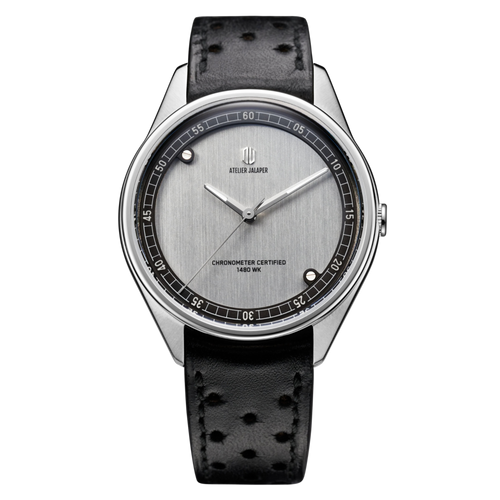
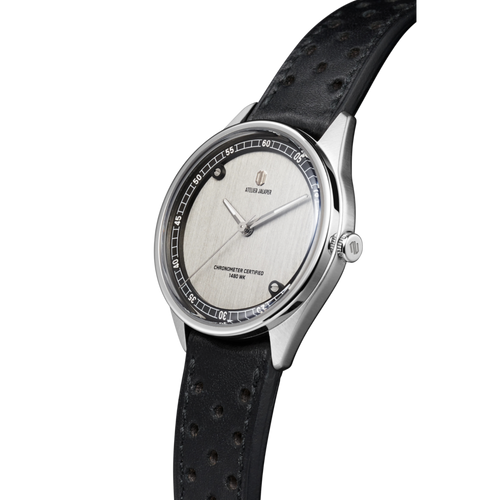
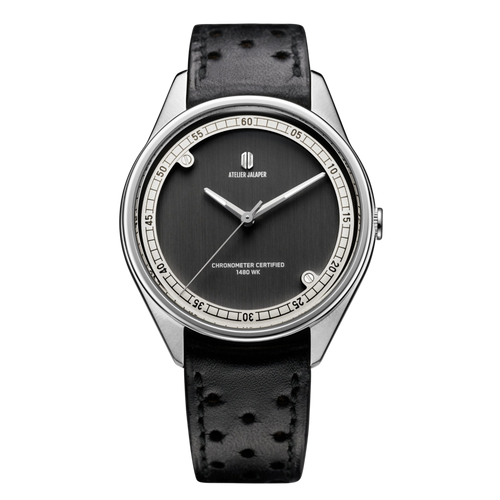
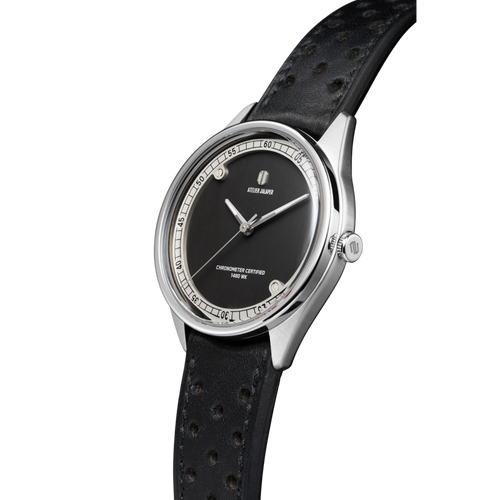
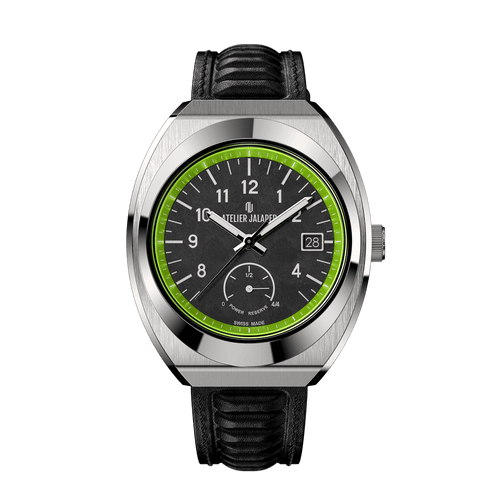
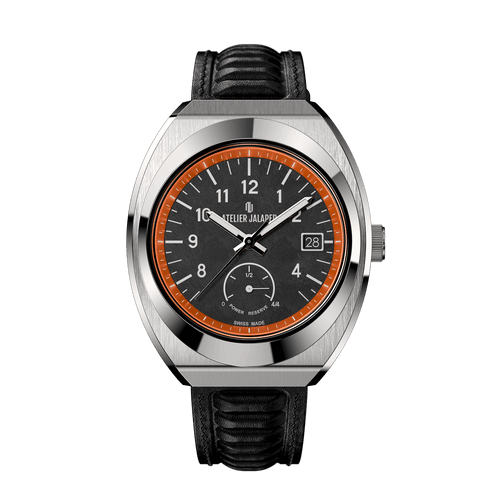
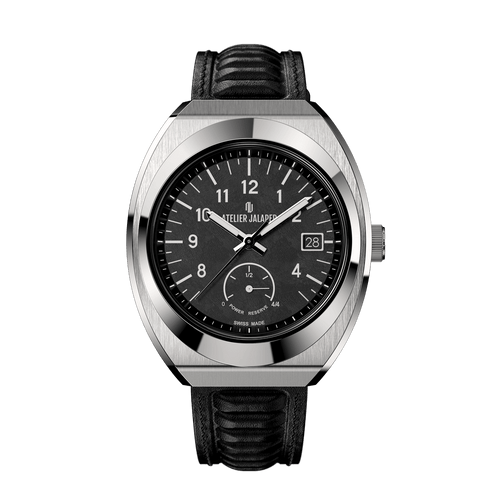
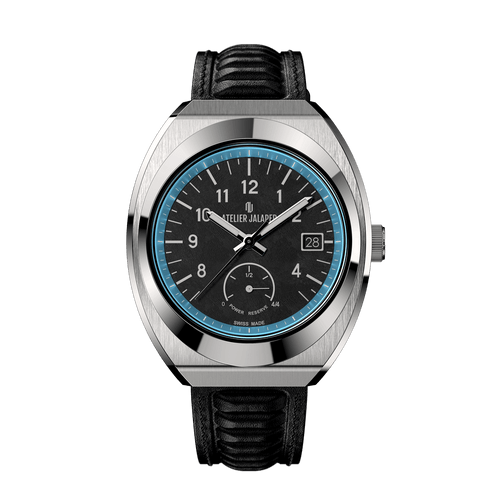
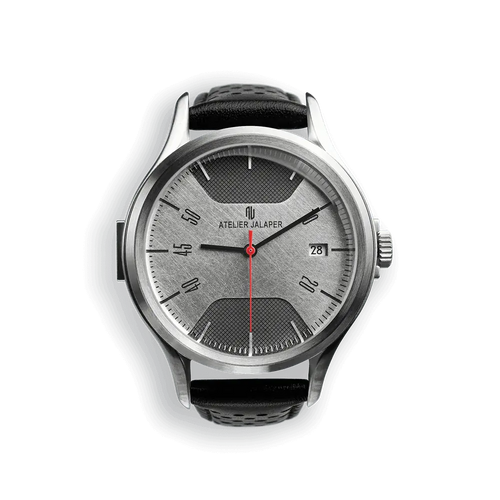
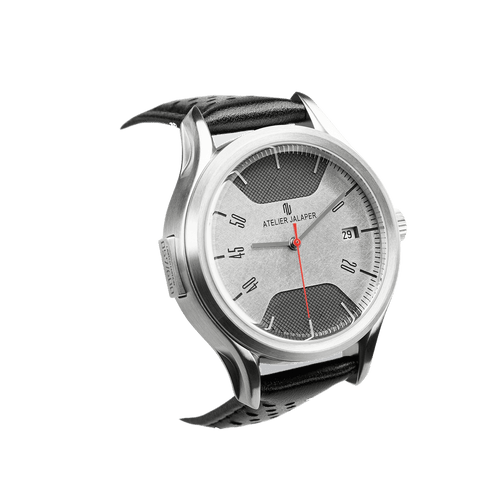
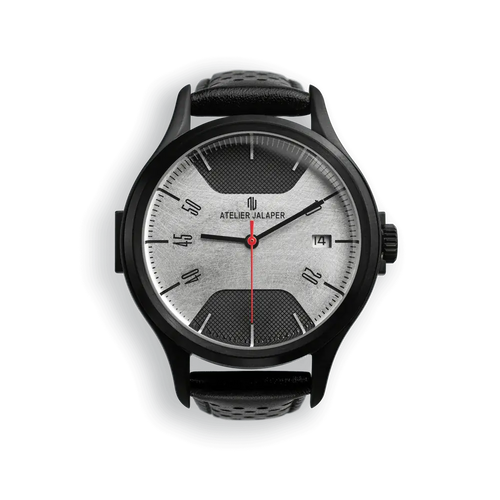
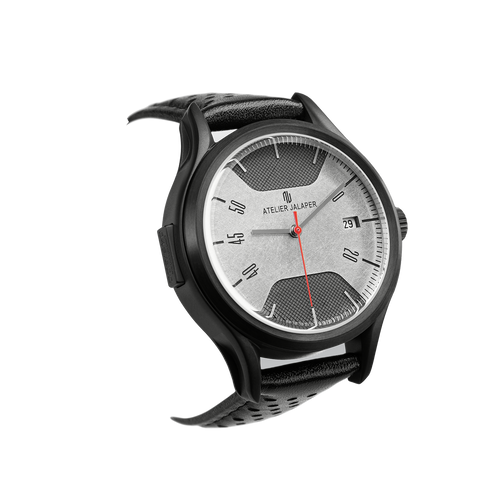

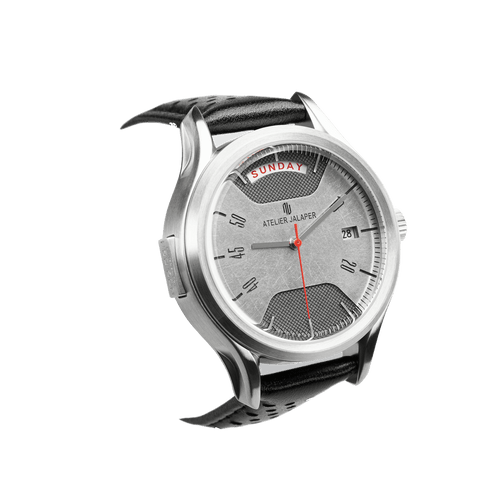
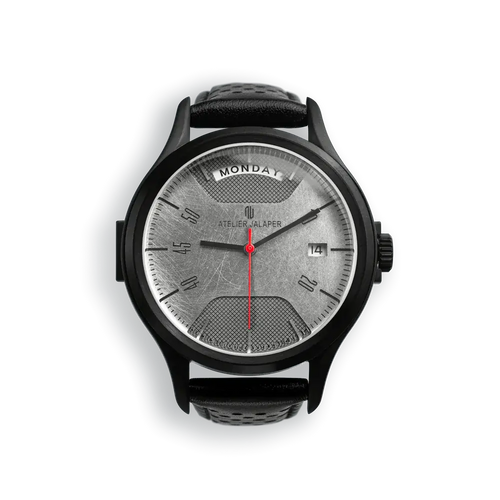
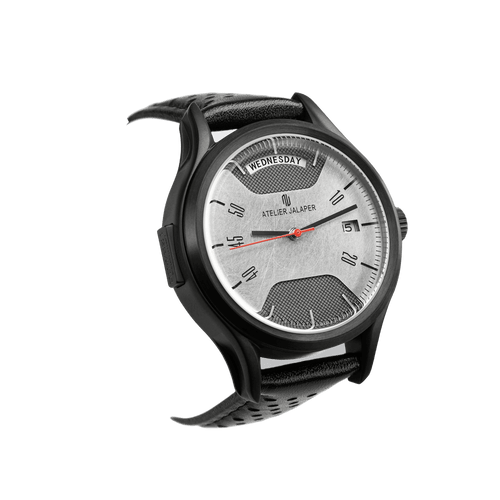



Can you wear your Type E watch at the beach ?
The question comes up every summer: can you wear your AJ-003 at the beach without concern? The answer depends more on what you plan to do once you're there than on the beach itself.
What 5 ATM water resistance actually means
Your watch is rated at 5 ATM, which corresponds to water resistance up to 50 metres under the standard used in watchmaking. That figure reflects laboratory test conditions, not a recommended depth for use. In practice, 5 ATM is more than enough for washing your hands, getting caught in a shower, or sweating in summer. It falls short, however, for prolonged swimming or jumping into water, both of which generate pressure spikes higher than the rating might suggest.
Sand: an underestimated risk
Beyond water itself, sand is a real threat to any watch, including the most water-resistant ones. Fine particles can work their way around the crown or between the strap and the case, causing early wear if they're not removed quickly. Getting the watch wet and then resting it on a sandy surface does more damage than most wearers expect.
The leather strap changes the picture
If your Type E collection watch is fitted with its original leather strap, the beach question shifts. Leather doesn't cope well with salt water or prolonged sun exposure: it's better to take the watch off before swimming, or to use a different strap for these occasions. Our strap selection guide presents more resistant alternatives for this kind of use.
Our recommendations for beach use
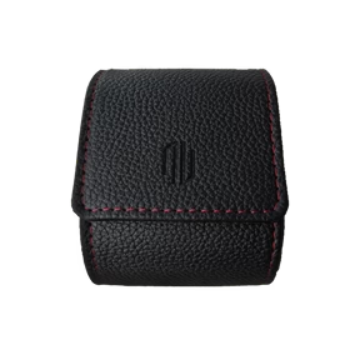
Wearing the watch for an afternoon at the beach, while keeping out of the water, is straightforward. For swimming, it's better to take it off and store it somewhere dry and away from sand. If you're planning to swim regularly during a holiday, consider leaving the watch in your room or in a travel case rather than keeping it on your wrist throughout.
After exposure to sea air
Even without immersion, sea air carries salt that can, over time, dull metal finishes. A quick wipe with a slightly damp microfibre cloth after a day by the sea is enough to limit this. Our case cleaning guide covers the full process.
Rinsing without immersing, after accidental contact
If the watch has been exposed to sand or salt water splashes without full immersion, a brief rinse under a gentle flow of fresh water removes residue before it settles, as long as the crown is pushed fully in. Dry immediately with a microfibre cloth, without deliberately immersing the watch beyond this quick rinse. It's a different thing from prolonged submersion, which puts far more strain on the water resistance gaskets.
Avoid high-impact water sports such as jet-skiing or surfing with the watch on: the combination of repeated impacts and water under pressure is much harder on the gaskets than a calm swim.
Remove the watch before applying sunscreen or after-sun lotion. These products contain components that can, like salt water on the leather strap, leave marks on the case or work their way around the crown if you don't let them dry before putting it back on.
If you come back from a day at the beach without having immersed the watch, a quick visual check of the crown and bezel is usually enough to spot any sand deposit before it works its way deeper during the next full clean.
In summary
Your AJ-003 handles a normal day at the beach well, as long as you avoid prolonged swimming and direct contact with sand. For more intensive water activities, our guide to the Type E watch and diving explains why a watch specifically designed for that purpose is the better choice.