




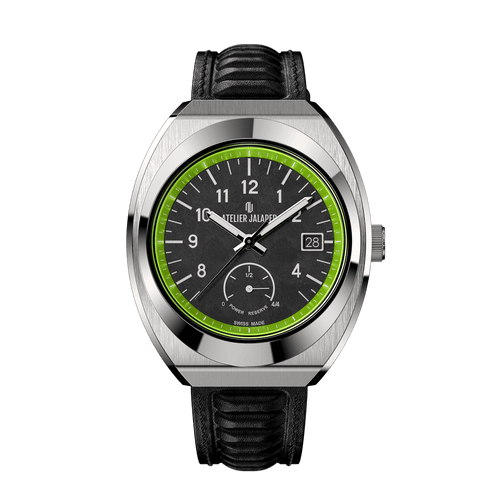
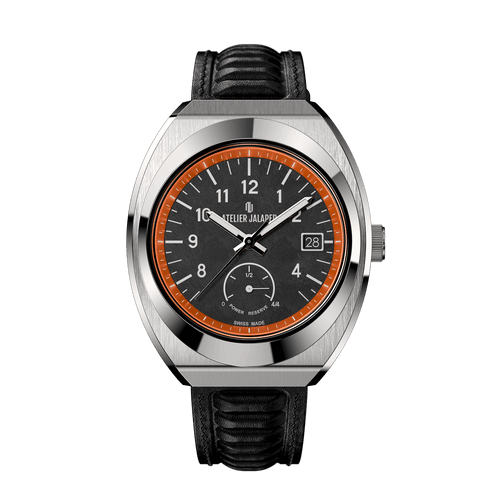
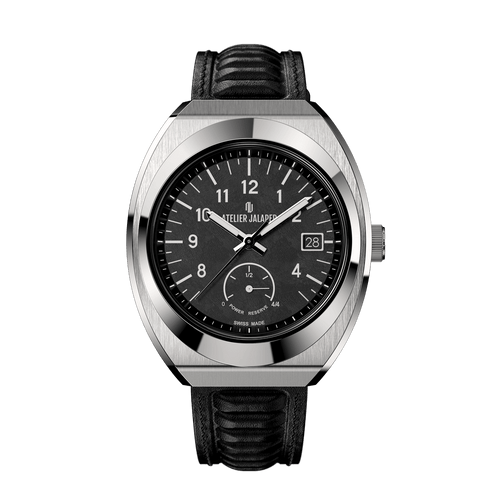
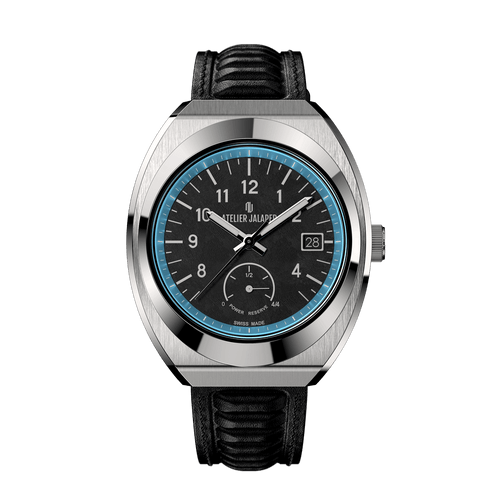



Which dial colour should you choose for the Type E collection ?
Choosing the dial colour for your Type E collection watch isn't quite like choosing the colour of a conventional watch. The dial comes from a genuine piece of automotive bodywork, which changes the equation compared to a straightforward factory colour choice.
Two references, two looks
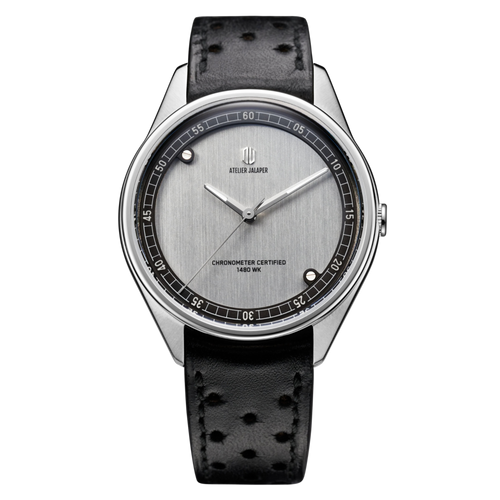
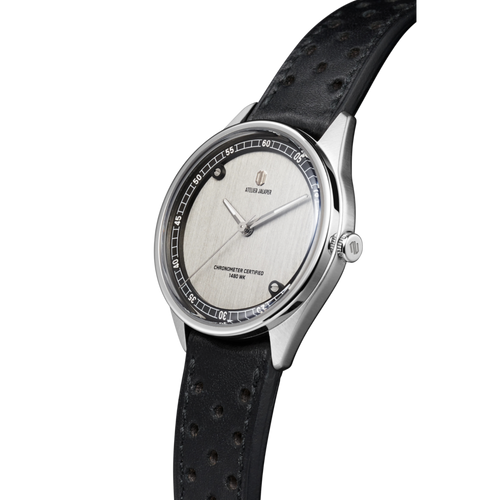
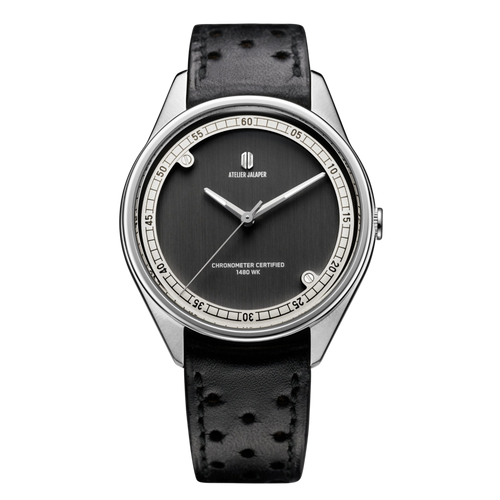
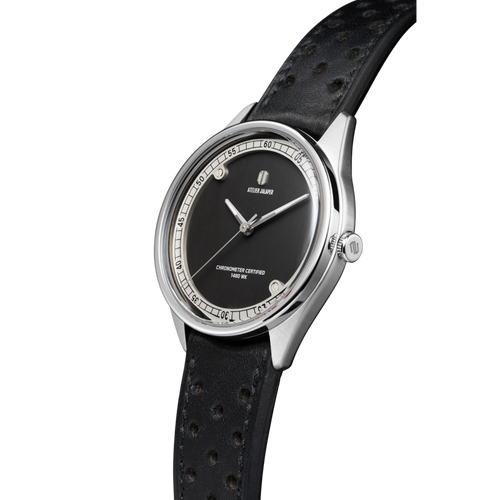
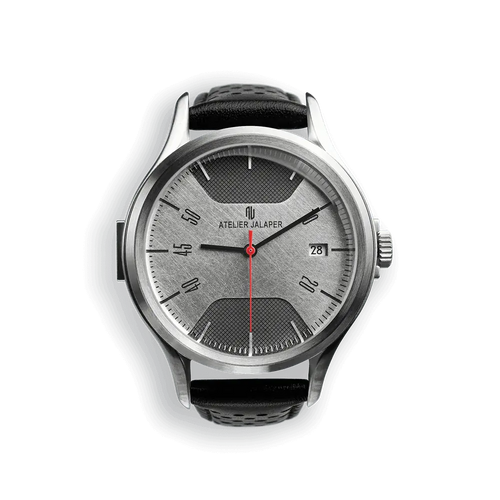
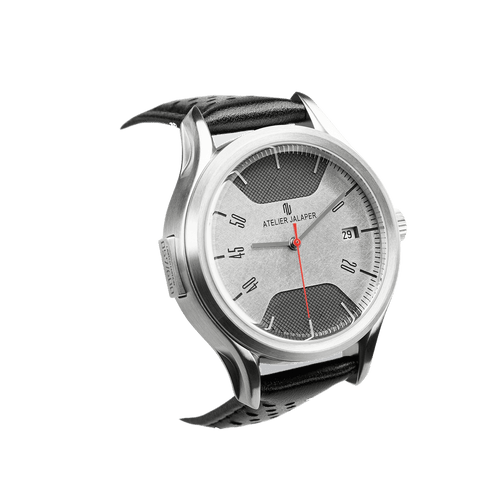
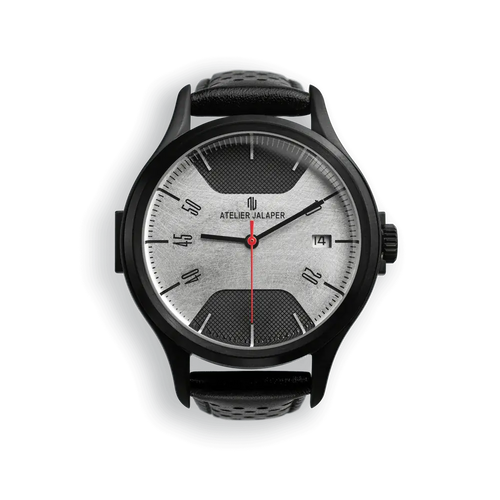
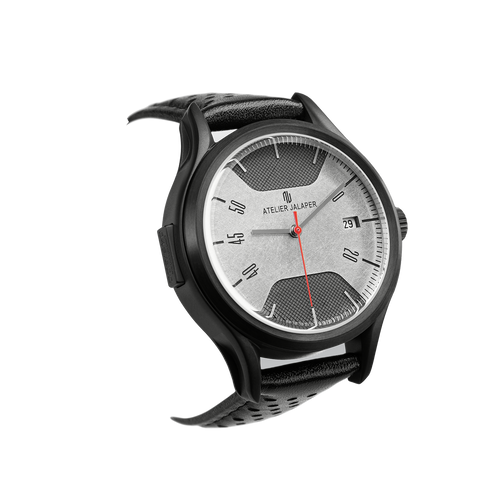
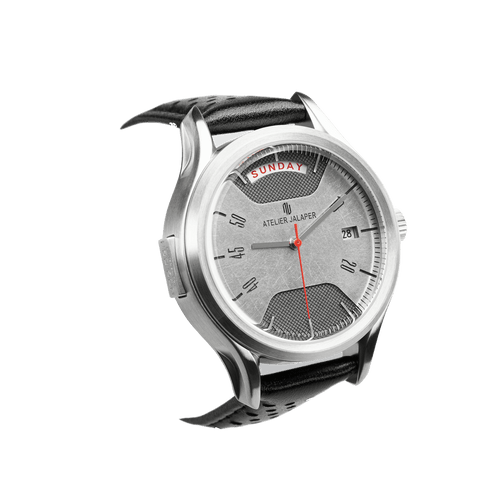
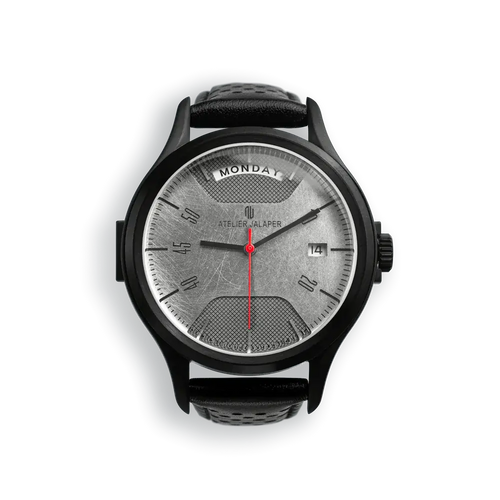
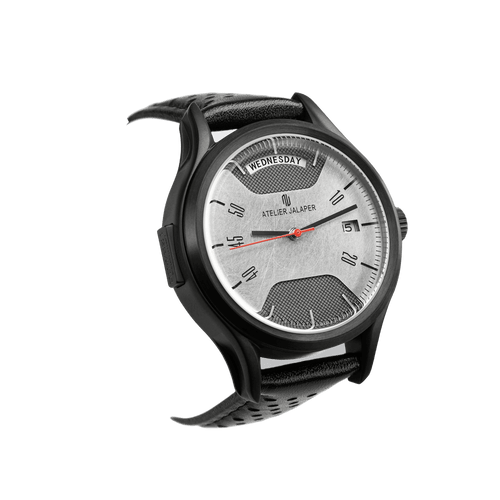
The Type E collection currently comes in two main references, the AJ-003-B and the AJ-003-W, distinguished primarily by the colour of the minute track on the dial: white on the W reference, black on the B reference. Both share the same origin, a 1962 Jaguar Type E Semi-Lightweight bonnet, and the same vertically brushed aluminium construction. Each reference is produced as a limited edition of 200 pieces.
Why every dial stays unique
Whichever colour you choose, keep in mind that no two Type E dials are exactly alike. The material comes from different areas of the same original bonnet, with variations in patina, reflectivity, and occasionally small surface marks that record its history. Choosing a reference sets the general tone of the minute track and finishing, but the precise texture of your dial will be your own.
How to make your choice
The first instinct is often to think in terms of what works with your wardrobe: a darker minute track tends to blend quietly into the dial, while a lighter one draws the eye toward the details and the automotive instrument feel. The second consideration is more personal: some owners prefer a more contrasted, immediately readable dial, others a quieter one that lets the aluminium texture speak for itself.
Think about the strap you'll wear most often too. A brown or cognac leather tends to work well with both references, while a black leather reinforces the contrast with a white minute track. Our strap selection guide goes into these combinations in more detail.
If you're still undecided
Comparing the two references in different light conditions, outdoors in the morning and under artificial light in the evening, gives a more accurate sense of how each looks than a single photograph taken in ideal conditions. Since each dial carries a patina specific to its piece of the bonnet, you can also ask Atelier Jalaper for close-up photographs of the exact piece that would be sent to you before it ships. It's the best way to make sure the texture and nuances of your dial match what you have in mind.
Keep in mind that lighting changes colour perception significantly in photographs: a tone that reads cool on a screen can look considerably warmer in natural light, which is worth remembering if you get the chance to see either reference in person.
If you already own another Atelier Jalaper watch, you might also think about consistency across the collection. Some collectors prefer to vary the references from one piece to the next to tell them apart at a glance, others prefer a visual continuity across their watches. There's no rule, just a matter of personal preference.
A personal decision
There's no objectively better colour in this collection: both references share the same material authenticity and the same construction. The final choice comes down to your own taste and how you plan to wear the watch. If you're still unsure, comparing both references in natural light, photographs or in person, gives the clearest picture before ordering. For a full breakdown of the materials behind each version, our guide to the Type E watch materials covers the case, dial, and crystals in detail.