




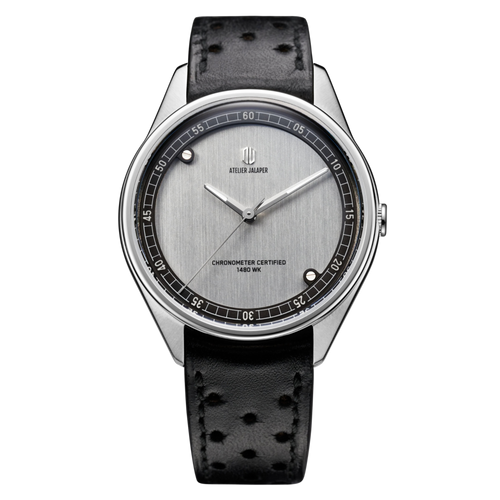
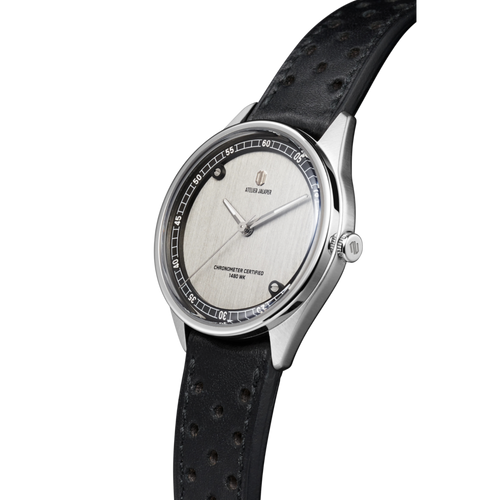
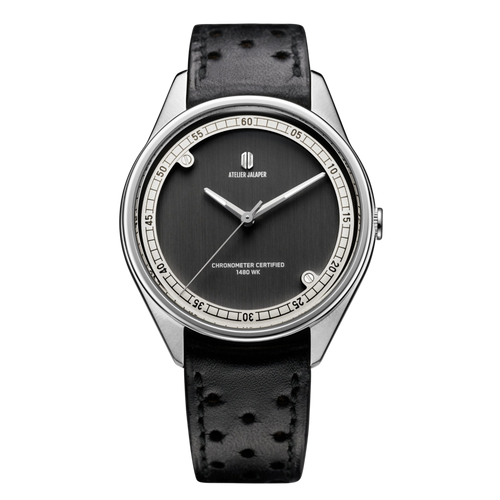
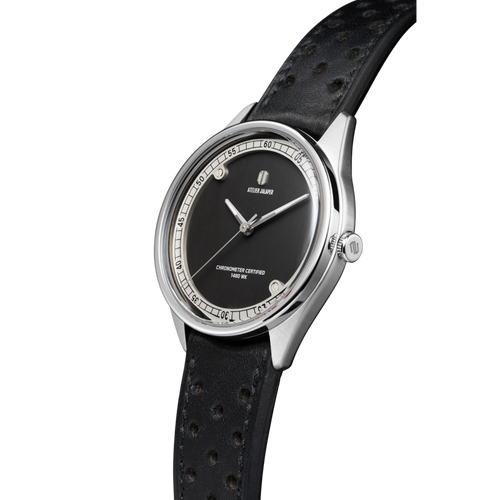
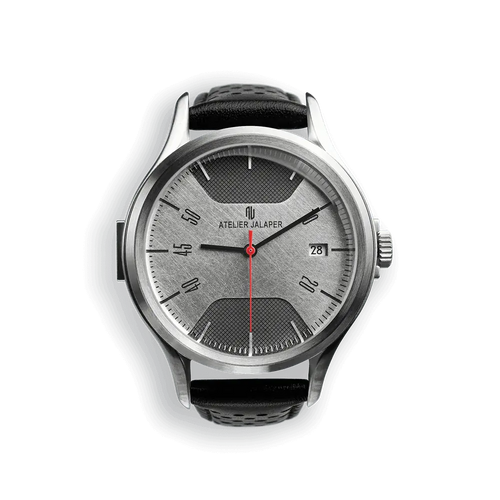
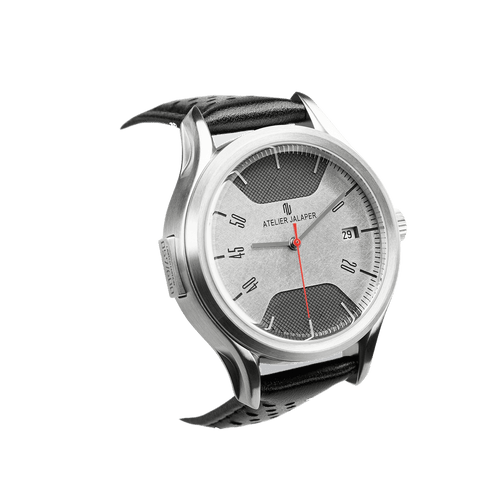
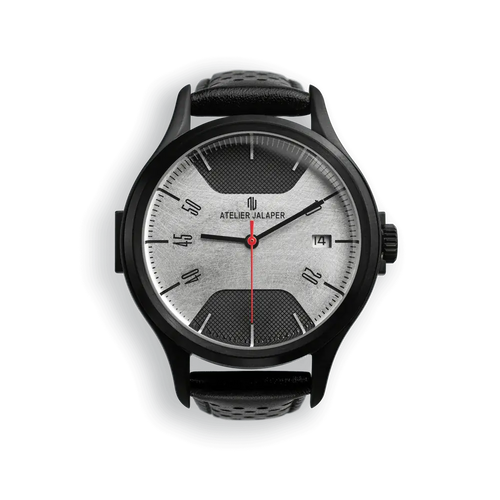
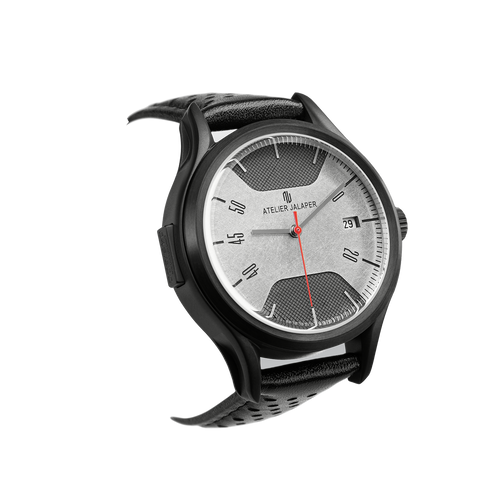





How to wind your automatic watch correctly
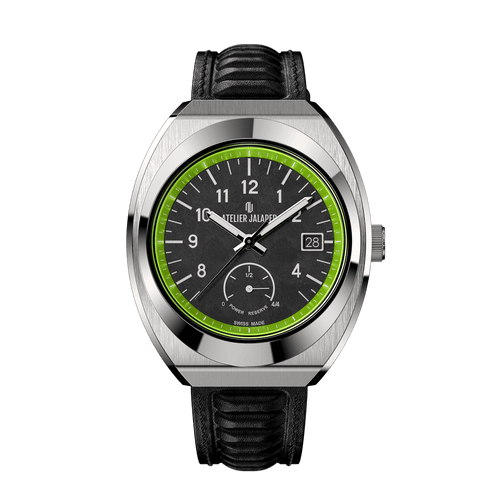
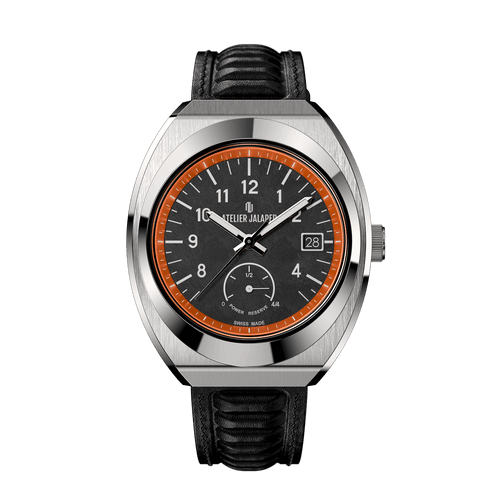
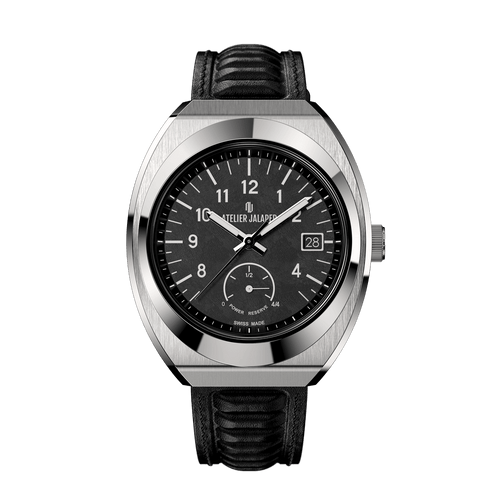
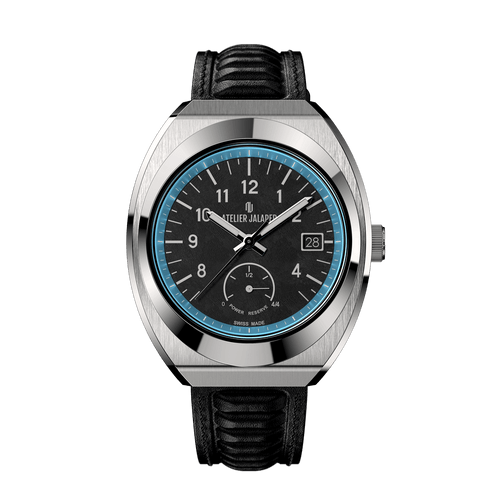
If your automatic watch AJ-003 has stopped after a few days without being worn, there's no cause for concern. Winding it correctly is a simple process, as long as you know the right method.
Why an automatic watch stops
The Sellita SW300-1B calibre in the AJ-003 offers a power reserve of around 56 hours once fully wound by the movement of your wrist. Beyond that, if the watch hasn't been worn, the mainspring unwinds completely and the watch stops, having exhausted its power reserve. This isn't a fault, it's the normal result of a mechanical movement that depends on regular wear to stay powered.
Manual winding via the crown
The SW300-1B can also be wound manually via the crown, in addition to the natural winding by the rotor. Here's how.
How to wind the watch
- Take the watch off your wrist, so you can work the crown more easily without putting strain on the case.
- Find the manual winding position of the crown, generally the first position when you pull it out slightly.
- Turn the crown clockwise, in small, steady turns, without forcing at any point.
- Continue until you feel a slight resistance, which indicates the mainspring is approaching full wind.
- Stop as soon as you feel that resistance, rather than pushing further, to avoid unnecessary strain on the mechanism.
- Then set the time by pulling the crown out one position further, as detailed in our time-setting guide.
- Wear the watch normally in the hours that follow, so the rotor takes over and maintains the power reserve.
How often to wind manually
If you wear the watch every day or close to it, you'll almost never need to wind it manually: the rotor handles that on its own. Manual winding is most useful after a period without wearing it, on returning from a trip for example, to restart it quickly rather than waiting several hours of wear before it picks up again.
Signs that a service may be needed
If the watch regularly stops well short of its usual power reserve, even after a full manual wind, this may indicate that the movement needs a service. Our service guide explains the signs to look for and the recommended frequency for this type of maintenance.
What the rotor does once the watch is running again
Once the manual wind is done and the watch is back on your wrist, the rotor takes over automatically to maintain the power reserve. There's no need to repeat the process each day. Manual winding is only for restarting a movement that has stopped completely, not for topping up a reserve already maintained by daily wear. Continuing to wind manually a watch already maintained by the rotor is unnecessary and adds nothing.
A slight excess of tension at winding doesn't generally damage this type of calibre, as most modern automatic movements include a system that limits mainspring tension. That said, stopping at the first sign of resistance remains the right habit.
If, after several attempts, manual winding seems to have no effect, or the crown turns with no perceptible resistance at all, this may point to a mechanical issue rather than a simple empty power reserve. In that case, consult a watchmaker rather than persisting, to avoid making an existing problem worse.
Some owners get into the habit of giving the watch a few turns each morning out of reflex, even when it doesn't strictly need it. With normal daily wear this isn't necessary, but it causes no harm as long as you stop at the first hint of resistance.
In summary
Winding your automatic watch comes down to a few turns of the crown, applied without force, until you feel a light resistance. That simple process, combined with regular wear, is all it takes to keep your AJ-003 running accurately.