




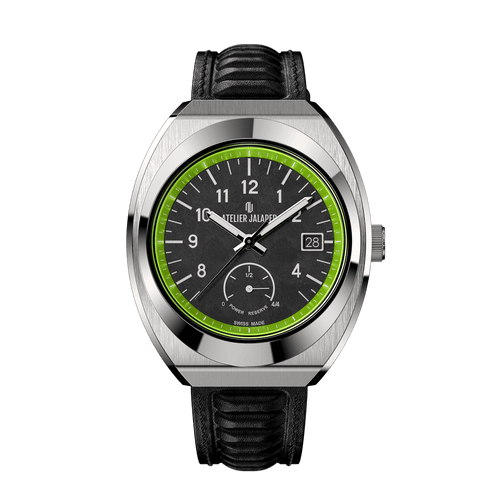
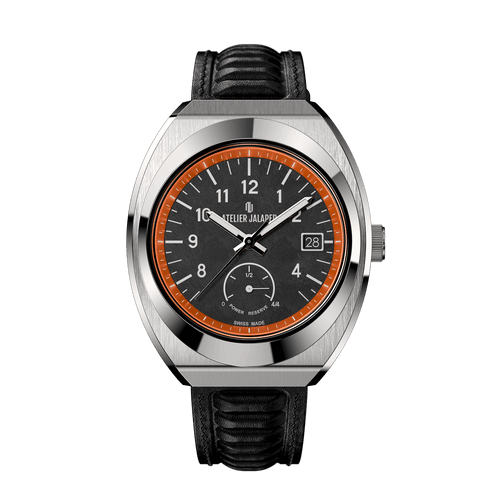
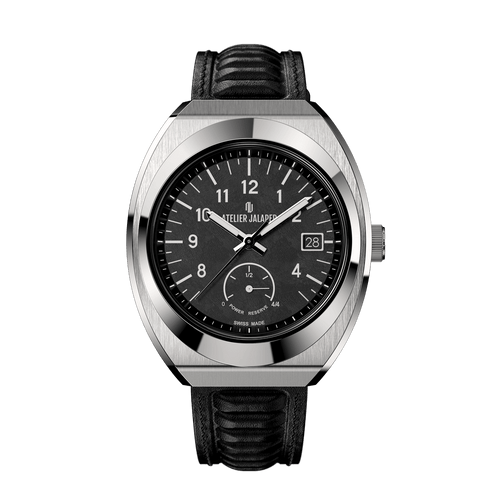
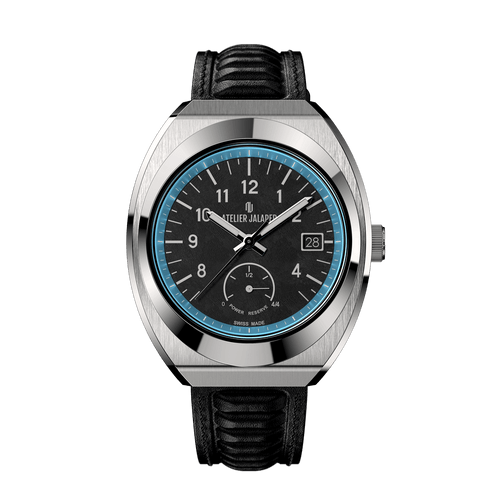





How long does a Jaguar Type E watch last ?
In mechanical watchmaking, the lifespan of an AJ-003 has no fixed answer. Well maintained, a quality automatic watch can last several generations rather than just one.
A mechanical movement doesn't wear out like a disposable object
Unlike most everyday electronics, the Sellita SW300-1B calibre in your watch is designed to be serviced and repaired rather than replaced. Wear parts such as springs or certain escapement components can be swapped by a watchmaker during a service, effectively returning the movement to near-new condition. That's why mechanical watches far older than the AJ-003 are still running today.
What actually determines longevity
Three factors matter more than anything else. First, regular servicing: a movement service every few years, before a problem has time to develop, generally costs less and protects the mechanism better than an emergency repair. Second, everyday use: avoiding hard knocks, excessive magnetism, and extreme temperature changes limits premature wear. Third, consistent cleaning, particularly around the case and strap, which stops accumulated dirt from reaching sensitive areas. Our case cleaning guide covers the right approach.
The dial ages differently
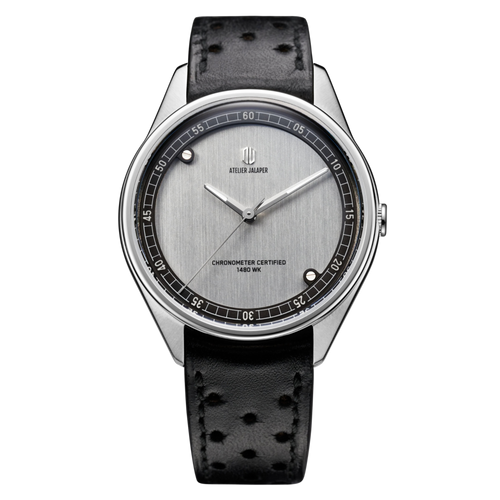
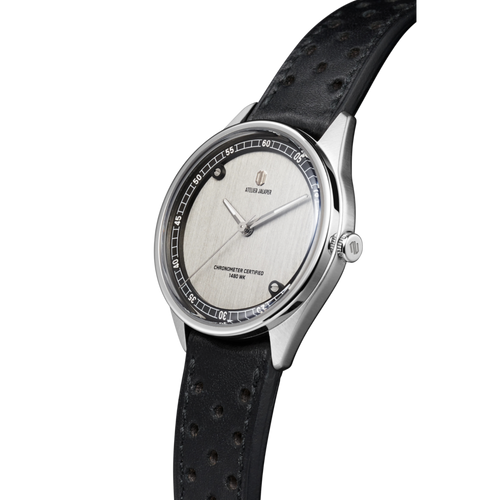
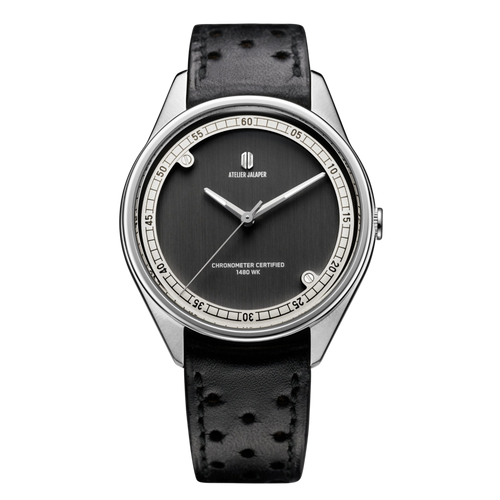
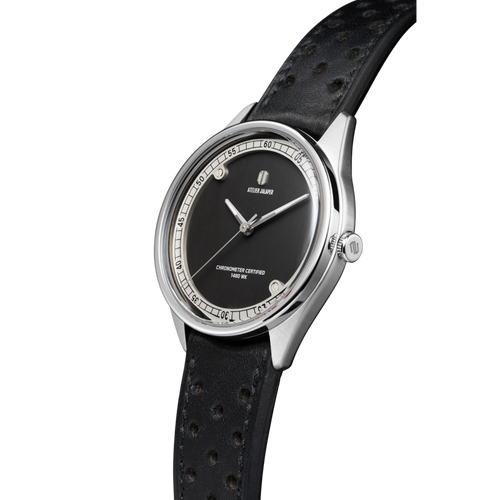
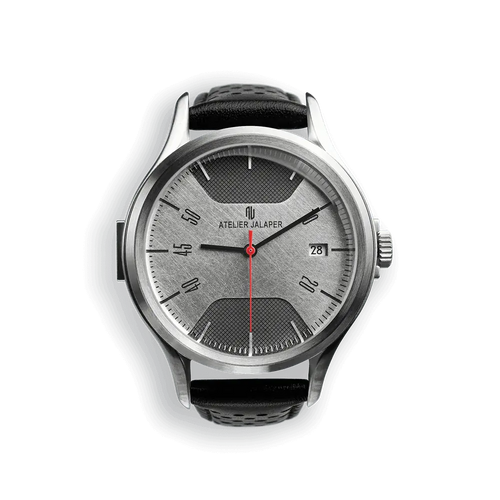
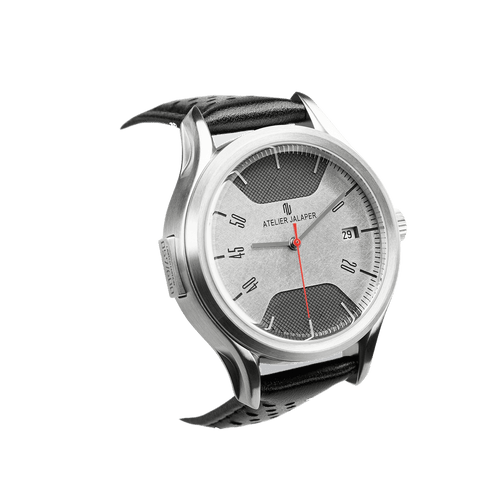
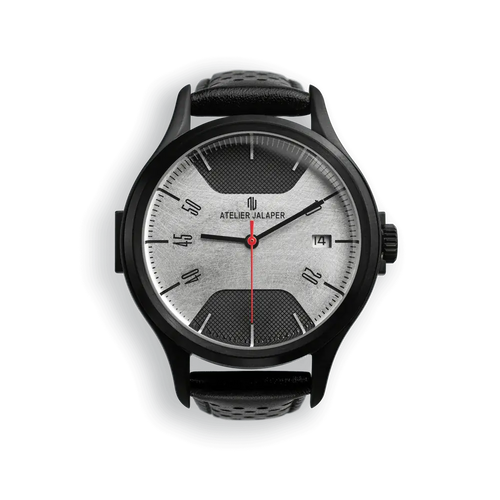
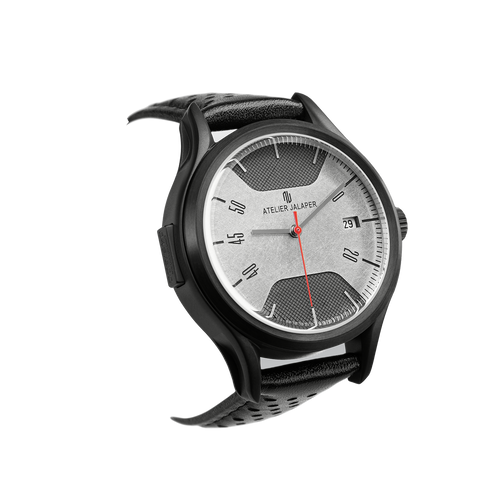
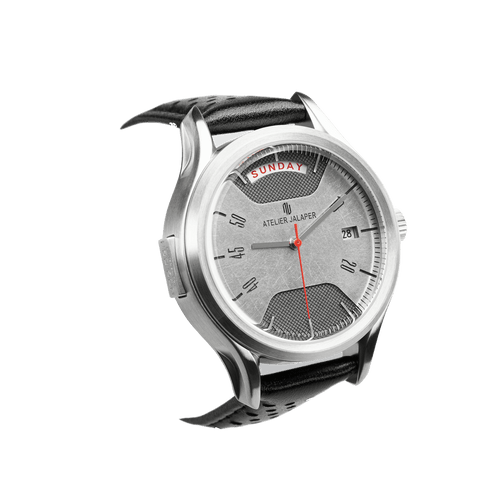
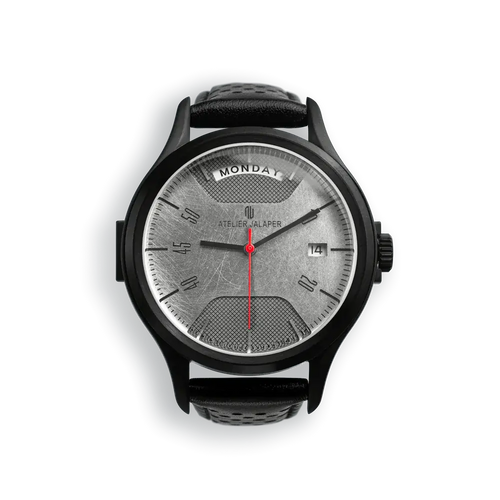
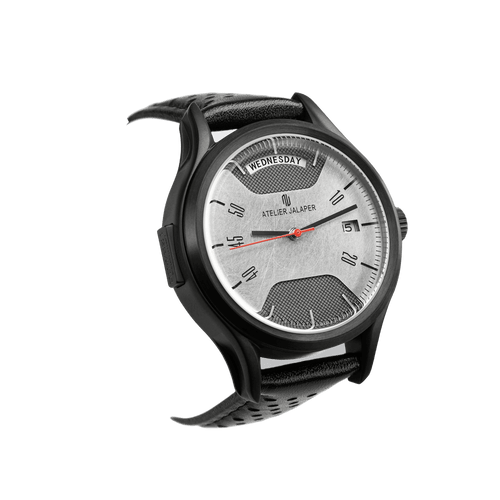
The dial of your watch, cut from the aluminium of an authentic 1962 Jaguar Type E Semi-Lightweight bonnet, doesn't behave like the rest of the watch over time. Its patina shifts slightly over the years, but that shift is part of its character rather than a sign of deterioration. This is an important distinction from a conventionally produced dial, which you'd want to keep as close as possible to its original state.
The strap: the first thing to watch
The leather strap is the component that needs the most attention over time. Well cared for, a quality leather can last several years before needing replacement, but it's generally the first part of an otherwise well-kept watch to show wear. Our strap cleaning guide explains how to delay that moment as long as possible. When the time comes, our guide to choosing a new strap or changing it yourself will walk you through it.
Getting ahead of problems rather than reacting to them
The best way to protect the lifespan of your watch is to be proactive: follow our daily storage advice, observe the general care precautions, know how to wind the movement correctly, and plan a movement service before a problem shows up. For the first two years, the watch is also covered by our manufacturer's warranty, which covers manufacturing defects and gives you a solid foundation to start from.
An object built to last across generations
Beyond the technical side, the longevity of a watch like the AJ-003 also comes from its heritage dimension. A piece whose dial carries the documented trace of a collection vehicle passes on differently from a mass-produced object: it holds a history of its own, one that doesn't fade with time but grows richer with each successive owner. That's a way of thinking about a watch's lifespan that goes well beyond the mechanical question. If you're travelling with it, our guide to travelling with your watch covers the right precautions on the road.
The Jaguar Type E itself, from which your watch dial was cut, is still being driven today more than sixty years after it was built. That says a lot about what regular maintenance can do for a well-made mechanical object.
Neglecting servicing over several years, on the other hand, can meaningfully shorten that lifespan: a movement that has never been serviced accumulates wear that a preventive intervention would have avoided. The longevity of a mechanical watch depends as much on the quality of its initial construction as on the choices its owner makes over time.
A well-maintained automatic movement can remain fully functional across decades of use and multiple owners. That's a fundamental difference from most electronics, which are designed with a finite lifespan.
In summary
With consistent care, a watch like the AJ-003 has no reason to stop working after a few years. That's one of the real attractions of mechanical watchmaking: the capacity to run for decades when looked after properly.
Frequently asked questions
Should you service an automatic watch even if it's running fine?
Yes. Servicing is preventive as much as corrective. The internal lubricating oils degrade over time even without intensive use, and an unserviced movement can accumulate quiet wear on parts that would have been straightforward to replace early. Waiting for an outright failure before acting generally costs more and causes more damage than an early service. Every 4 to 5 years is the usual benchmark in the industry.
Does the aluminium dial deteriorate over time?
Not in the conventional sense. Aluminium naturally develops a thin protective oxide layer, and the dial's patina shifts slightly over the years, but that shift is part of the piece's character rather than a sign of damage. What can genuinely harm it is direct contact with a cloth, a chemical product, or an abrasive surface, which is why the dial should never be cleaned directly, even with a soft cloth.
Can an automatic watch be passed down as an heirloom?
Absolutely. That's one of the reasons many collectors choose mechanical watchmaking over electronics. A regularly serviced movement can change hands without losing its functional value. The AJ-003, whose dial comes from a documented and dated vehicle, also carries a story of its own that travels with the watch, which makes it particularly interesting from that angle.